Do Muslims Believe in the Bible? Here's the Answer
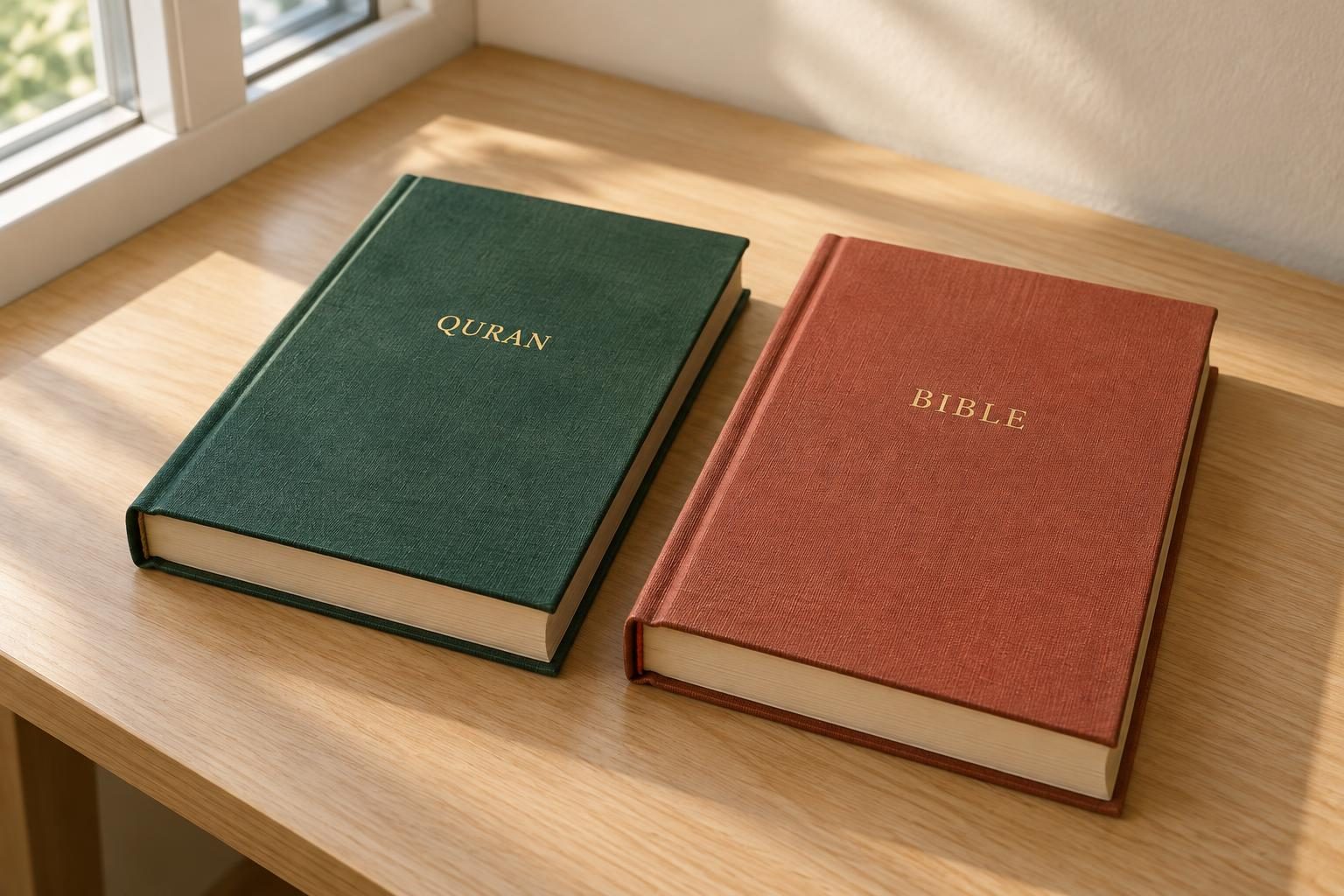
If you ask a Muslim whether they believe in the Bible, the answer is yes—but not in the way you might think.
Muslims believe that God revealed scriptures before the Quran, including the Torah given to Moses (peace be upon him) and the Gospel given to Jesus (peace be upon him). But that does not mean Muslims believe everything in the Bible today.
Islam recognizes the earlier revelations and the people who received them, but it views the Bible very differently today.
So what do Muslims believe? And why do Islam and Christianity differ so radically on scripture? Let's have a look.
Do Muslims Believe in the Bible?
Yes, Muslims believe that God sent revelations before the Quran. This is actually an important part of Islamic faith.
Among these earlier revelations are:
- The Torah (Tawrat): The revelation God gave to Moses (peace be upon him).
- The Gospel (Injil): The revelation God gave to Jesus (peace be upon him).
- The Quran: The final revelation, given to Muhammad (peace be upon him).
The Quran refers to these earlier scriptures in several places. For example:
- Quran 3:3 says that God revealed the Torah and the Gospel before the Quran.
- Quran 5:46 explains that God gave Jesus (peace be upon him) the Gospel.
- Quran 2:4 describes believers as believing in what was revealed to Muhammad (peace be upon him) and what was revealed before him.
So Islam clearly recognizes earlier revelations from God.
However, an important difference exists between believing in the original revelation and accepting every book and passage in the Bible as it exists today. And that distinction is at the heart of the discussion.
What Is the Difference Between the Bible and the Quran in Islam?
One thing that can confuse is that Muslims and Christians don't necessarily mean the same thing when they talk about the Gospel.
In Islamic belief, the Gospel was a revelation God gave directly to Jesus (peace be upon him). Muslims do not understand it the same way as the four Gospels in the New Testament.
The Christian Bible is not a record of God speaking directly. It's a collection of books written at various times. It's made up of the Old Testament (the Jewish scriptures) and the New Testament (the accounts of the life and teachings of Jesus (peace be upon him) and other writings.
Here is a simplified comparison:
| Question | Islamic understanding | Christian understanding |
|---|---|---|
| What was given to Jesus (peace be upon him)? | The Gospel, revealed by God | The four New Testament Gospels are central accounts of his life and teachings |
| Is the Quran God's revelation? | Yes, the final revelation | No, Christians generally do not recognise it as scripture |
| Is the Bible authoritative? | Earlier revelations are recognised, but the Bible today is not accepted wholesale as the original revelation | The Bible is accepted as authoritative scripture, although interpretations differ between Christian traditions |
It is also worth separating religious belief. Of course, this is a broad comparison. Different schools of thought exist within both religions, and not every believer explains these questions in the same way.
Do Muslims Believe the Bible Has Been Changed?
This is probably one of the most common questions surrounding Islam and the Bible.
Many Muslims believe that the original revelations were not preserved entirely in their original form. They often refer to Quranic passages such as 2:75, 3:78, and 5:13, which discuss the distortion of words, the concealment of parts of scripture, or the misrepresentation of revelation.
But it is more than simply saying the Bible was changed.
Muslim scholars have not always agreed on precisely what happened. Some have argued that the text itself was altered over time. Others have emphasized changes in interpretation, the concealment of certain teachings, or how scripture was explained and used.
But this question has another side. What Muslims believe about the preservation of earlier revelations is one thing. What we can establish through historical research is another. Historians have studied how the biblical texts were written, copied, and passed down through generations, as well as how the collection of books we know today as the Bible came together.
The important point is this: Muslims generally believe in the original revelations from God, but they do not consider the Bible in its present form to have the same status as the Quran.
Do Muslims Believe in Jesus and His Teachings?
Absolutely. And this is something that often surprises people who haven't looked closely at Islam.
Jesus (peace be upon him), known as Isa in Arabic, is one of Islam's most important figures. Muslims believe that:
- He was born to Mary through a miraculous birth.
- He was the Messiah.
- He performed miracles by God's permission.
- God sent him with a message.
- According to traditional Islamic belief, he will return before the end of time.
Mary is also deeply respected in Islam. In fact, the Quran has an entire chapter named after her.
Where Muslims and Christians disagree is mainly about the nature of Jesus (peace be upon him). Christians traditionally believe that he is divine, the Son of God, and central to the doctrine of the Trinity. Muslims, on the other hand, believe that he was a human messenger of God, not God himself.
So Muslims don't reject Jesus (peace be upon him)—quite the opposite. Believing in him is essential to their faith. They understand his role differently.
Do Muslims Have to Reject Everything in the Bible?
No. The Islamic position is not necessarily to dismiss everything found in the Bible.
Muslims can recognize many teachings and stories that are consistent with their own beliefs, such as:
- Belief in one God.
- The importance of prayer and charity.
- Moral responsibility and justice.
- The stories of earlier prophets (peace be upon them).
- The importance of forgiveness and compassion.
At the same time, Muslims generally examine biblical teachings through the framework of the Quran. When something conflicts with Islamic belief, they may question its interpretation or whether it represents the original revelation.
This is one reason a comparison between the Bible and the Quran is so fascinating. You can certainly find commonality, but you can also find real differences worth looking at and understanding rather than ignoring.
How Can You Explore the Bible and Quran for Yourself?
You don't have to take my word for it. If you're curious, one of the best ways to understand these differences is to read the texts yourself.
Here are three ways to get started:
- Compare the same stories. Read the accounts of Jesus (peace be upon him) and Mary in the Quran, then compare them with the New Testament.
- Choose reliable translations. Good translations and commentaries can help explain the historical background and the meaning of particular passages.
- Ask questions as you read. Look at where the texts agree, where they differ, and why. Don't feel that you have to conclude immediately.
A Bible and Quran comparison guide can also be useful if you want to explore the subject in more depth. Just make sure you choose one that presents both traditions fairly.
So, Do Muslims Believe in the Bible?
The answer is yes, but with an important distinction.
Muslims believe that God revealed the Torah and the Gospel before the Quran. However, they generally do not consider the Bible in its present form identical to those original revelations or to have the same authority as the Quran.
That is why the Islamic answer can seem a little complicated at first. Muslims recognize the divine origins of earlier scriptures but understand their preservation and transmission differently.
You don't have to agree with the Islamic position to understand it. And you certainly don't have to accept everything you read without questioning it.
The important thing is to look beyond assumptions, explore the sources, and decide for yourself.
That's what Islam Without Borders is all about.
Discover Islam. Think for yourself.