
How Does Islam Explain God's Existence?
By Eric Karim Johnson·Published November 3, 2026
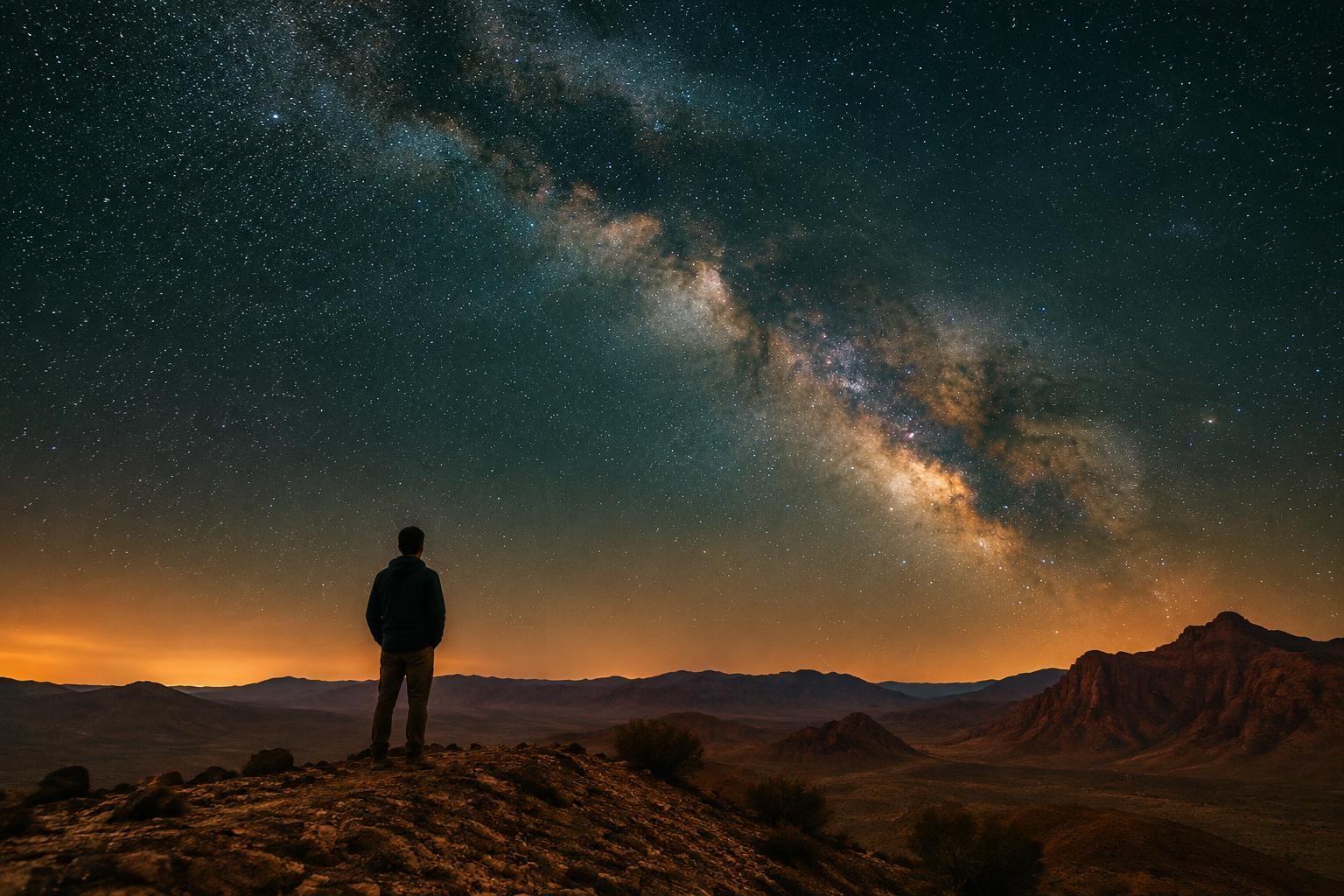
Have you ever looked at the universe and wondered why anything exists at all?
Why is there something rather than nothing? Where did the universe come from? And if everything has an explanation, what explains God's existence?
These are not new questions. People have asked them for thousands of years, and they remain at the heart of discussions about religion, philosophy, and science.
Islam offers a particular way of looking at these questions. It begins with the belief that the universe is not simply here by chance or without purpose, and it points to one Creator: God, known in Arabic as Allah.
But how does Islam explain this belief? And what reasons does it offer for believing in God?
Let’s explore the ideas without assuming that every question has an easy answer.
What Does Islam Teach About God's Existence?
At the heart of Islam is the belief in one God, who created everything and depends on nothing.
This belief is known as Tawhid, the oneness of God. It means that God is unique, eternal, and unlike anything within the universe.
The Quran describes this idea clearly in Surah Al-Ikhlas:
“Say, He is Allah, the One. Allah, the Eternal Refuge. He neither begets nor is born. Nor is there to Him any equivalent.” — Quran 112:1–4 (translation of the meaning)
For Muslims, God is not one object among others in the universe. He created the universe itself.
That leads naturally to a question: what reasons does Islam offer for believing that such a Creator exists?
Does the Universe Point to a Creator?
One way Islamic thought approaches God's existence is by looking at the universe itself.
Everything around us exists within a universe that has structure, laws, and a history. Stars form, planets move, and the physical world follows patterns that we can study.
The Quran calls people to reflect. It does not ask them to ignore the world around them. Instead, it tells them to look at the world and reflect on it.
For example, Quran 3:190 refers to the creation of the heavens and the earth, and the alternation of night and day, as signs for people who reflect.
The underlying idea is that the universe is not merely something to observe. It can also lead us to deeper questions about its origin and meaning.
Of course, observing the universe does not automatically settle every philosophical question about God. People interpret the evidence differently. Still, in Islam, reflection on the natural world is an important part of thinking about the Creator.
Why Does Islam Say God Must Be One?
Another important question is why Islam insists on one God.
The Islamic understanding is that the Creator must be unique and independent. If multiple gods had separate, competing powers, the universe could not remain under a single, coherent order.
The Quran expresses this idea in Surah Al-Anbiya:
"If there had been gods besides Allah, they both would have perished." — Quran 21:22 (translation of the meaning)
This is often put forward as an argument for the oneness of God: the universe is so ordered and unified that it must have one source.
Islam also rejects the idea that God is part of creation or that God needs something else to exist. God is understood as eternal and self-sufficient.
This is a philosophical argument, not a mathematical demonstration. Its purpose is to show why Islamic belief sees one Creator as the foundation of everything.
Who Created God?
This is probably one of the most common questions people ask when discussing God's existence.
If everything needs a creator, then who created God?
The Islamic answer begins with an important distinction: Islam does not teach that everything needs a creator. It teaches that things which begin to exist depend on something beyond themselves.
In Islamic belief, God did not begin to exist. God is eternal.
The Quran describes God as Al-Awwal and Al-Akhir—the First and the Last (Quran 57:3). In other words, God is not another object in the chain of things that came into existence.
This is where the discussion becomes rather philosophical. Some people will find the notion of an eternal Creator completely convincing. Others will question whether the universe itself could be eternal, or whether there might be some other explanation.
Islam’s position is that the universe is dependent, while God is not.
Does Islam Encourage People to Think About God?
Yes. If you’re exploring Islam, this is worth understanding.
The Quran frequently invites people to reflect, observe, and think. Faith is not presented as accepting an idea without considering it. If you want to look at these passages yourself, here is how to read the Quran in English.
One example is the story of Abraham (peace be upon him), who reflects on the stars, the moon, and the sun before turning away from them as objects of worship (Quran 6:76–79).
The passage is often understood as showing the difference between things that appear powerful or impressive and the One who is truly worthy of worship.
The Quran also asks questions that encourage people to think about their own existence and the world around them.
For someone curious about Islam, this is an interesting starting point: the invitation is to reflect on existence rather than merely memorize religious statements.
What About Science? Can It Explain the Existence of God?
Science has helped us understand an extraordinary amount about the universe, including its development, the formation of stars and planets, and the physical laws that govern nature.
Islam doesn't necessarily see science and belief in God as mutually exclusive. For many Muslims, science is a way of understanding how the world works, while the 'why' question is something different.
However, it is important not to claim that a scientific discovery automatically proves God exists. Nor should we assume that science has answered every question about existence.
The discussion involves different kinds of questions:
- Science: How does the universe behave, and how did it develop?
- Philosophy: Why is there a universe at all? What does it mean for something to exist?
- Religion: Is there a Creator, and what might that mean for our relationship with Him?
These areas can overlap, but they are not identical. Taken together, they help frame the question from different angles.
So, How Does Islam Explain the Existence of God?
Islam teaches that God is the one eternal Creator, independent of everything else. It also invites people to reflect on the universe, its order, their own existence, and the possibility that all of this points to a source beyond creation.
For Muslims, belief in God is not simply an answer to where the universe came from. It also shapes how they understand life, purpose, morality, and their place in the world. Prayer is one way this shows up in daily life — see why Muslims pray five times a day.
You don’t have to agree with every argument to explore the subject. And you don’t have to pretend that difficult questions disappear once you begin studying religion.
The question of God’s existence deserves careful thought, honest discussion, and an open mind. It is a question worth returning to with patience and sincerity.
That is where the exploration begins—and where it can continue.
Discover Islam. Think for yourself.